India’s upcoming Union Budget should include tax-based incentives for energy storage, the India Energy Storage Alliance (IESA) has said.
Finance Minister Nirmala Sitharaman will present the Union Budget 2023-2024 this week, on 1 February 2023. IESA said that earlier this month, it made a “detailed representation” to the minister, asking for key recommendations on various aspects of the fiscal budget relating to the industry to be considered.
The industry group has been consistently welcoming of measures included in recent years’ budgets, from directing funds into renewable energy and climate change mitigation in 2020 and moves to stimulate domestic clean energy manufacturing and hydrogen development in 2021.
Last year’s budget took a step further forwards and was the first time energy storage was directly referenced, and energy storage projects – along with data centres – were given the status of infrastructure assets.
Try Premium for just $1
- Full premium access for the first month at only $1
- Converts to an annual rate after 30 days unless cancelled
- Cancel anytime during the trial period
Premium Benefits
- Expert industry analysis and interviews
- Digital access to PV Tech Power journal
- Exclusive event discounts
Or get the full Premium subscription right away
Or continue reading this article for free
That meant that for the first time, energy storage would be included on a list of project types that could qualify for infrastructure loans, which Sitharaman said would “facilitate credit availability”. IESA president Dr Rahul Walawalkar said that it would help address the industry’s biggest concerns “related to ease of financing”.
India’s energy storage market does already seem poised for rapid growth, with government-run or owned organisations like the Solar Energy Corporation of India (SECI) kicking off tenders for large-scale battery energy storage system (BESS) projects and various other supportive policy measures. Meanwhile international players like Fluence, Powin and GE among those to have entered the market recently or ramped up existing operations.
This is however in response to an acute need for the technologies involved, with IESA forecasting that it will require at least 160GWh of energy storage by 2030 to integrate the 500GW of new non-hydroelectric renewable energy sources called for by national policy targets onto the nation’s energy networks.
IESA’s recommendations for 2023-2024 Union Budget
Significant barriers and challenges to remain for the adoption of energy storage, as well as electric mobility and green hydrogen, all areas of interest for IESA and its 180+ member organisations.
In the energy storage industry, tax holidays could stimulate investment, and along with those, the IESA recommended reducing rates of India’s goods and sales tax (GST), as well as exemptions on customs and excise duties.
While those would bring down costs in the short-term, IESA suggested that tax incentives could be offered in the Union Budget for efforts to bring down costs longer term as well.
One parallel from the international industry might be the US’ Inflation Reduction Act (IRA) legislation, which is bringing in significant tax-based financial incentives for deployment of energy storage systems, as well as extending existing clean energy generation and deployment incentives and domestic manufacturing and production.
India has been keen to support domestic manufacturing already with schemes like the Production Linked Incentive (PLI) through which the first 50GWh of planned advanced cell chemistry (ACC) battery factories have been selected.
The other side of that coin is increasingly protectionist policies on imported goods, with the high tariffs on imported solar PV modules causing a slowdown in the market, as reported by our colleagues at PV Tech. That dynamic is forecast to change by around 2025, as domestic production ramps up to start meeting demand, however.
IESA recommended also a lowering of GST for electric vehicle (EV) batteries. Those are presently set at 18% or 28%, the two highest bands, whereas the industry group argued that a 5% rate – the lowest available save for the 0% rate applied to exempt goods and services – would be more appropriate.
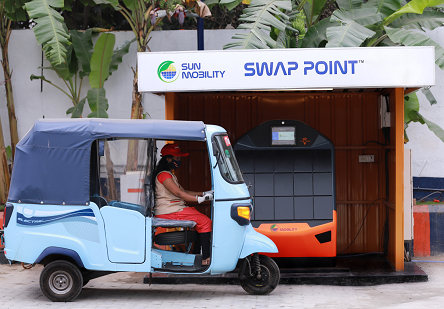
There should also be incentives for battery swapping programmes, the IESA said, while its asks on hydrogen electrolysers and green hydrogen production also focused on reductions in the GST rates applicable.
The government should also push forward and run the second 50GWh tranche of its PLI scheme solicitations for advanced battery manufacturing for stationary storage applications at all scales from front-of-the-meter utility- and grid-scale, to commercial and industrial (C&I) and other behind-the-meter.
IESA would also like to see a “significant reduction of duties” included in the Union Budget, as well as credit guarantee schemes for manufacturers of intermediate materials used in battery cells, which would support exporting businesses in the country.
Finally, startups and small and medium enterprises working on energy storage and electric transport could be aided with loan guarantees for high-risk technologies, and a scheme to cover revenue shortfalls in the manufacturing sector.
Energy-Storage.news’ publisher Solar Media will host the 1st Energy Storage Summit Asia, 11-12 July 2023 in Singapore. The event will help give clarity on this nascent, yet quickly growing market, bringing together a community of credible independent generators, policymakers, banks, funds, off-takers and technology providers. For more information, go to the website.